
Back to Blogs
AI Product Photography: Transform Flat Lay Images into Professional Model Photoshoots for Fashion E-Commerce
AI Product Photography: Transform Flat Lay Images into Professional Model Photoshoots for Fashion E-Commerce
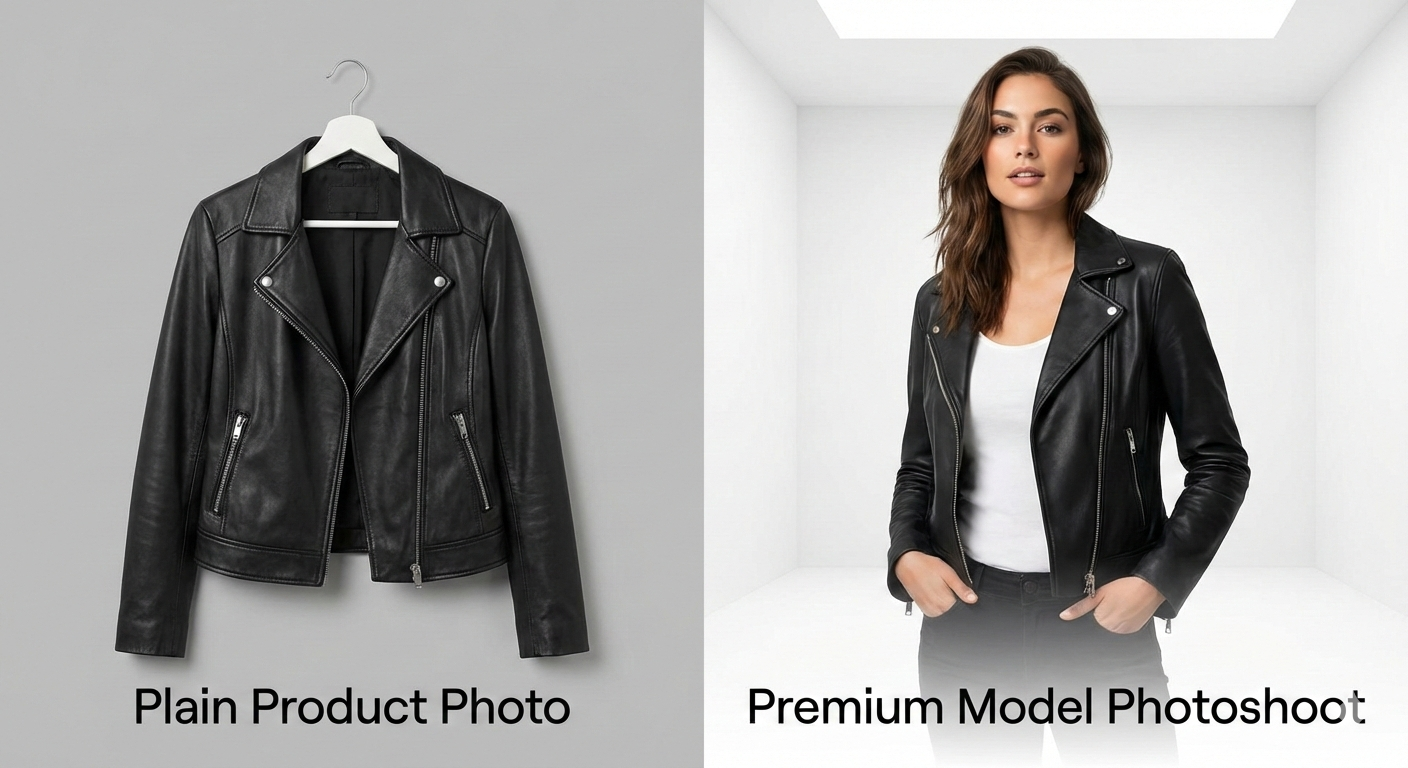
Visual presentation determines everything in online fashion retail. Customers cannot touch fabrics, examine stitching, or see how garments fit real bodies. Product photography becomes the sole communication channel between brands and buyers. A flat lay image might document what exists, but professional model photography demonstrates how products look, fit, and transform the wearer.
The universal challenge confronting fashion businesses remains unchanged for decades: professional model photoshoots demand thousands of dollars, require extensive coordination, and consume weeks of valuable time. For direct-to-consumer fashion brands, online clothing retailers, and marketplace sellers managing seasonal collections, traditional photography creates bottlenecks that delay launches and limit growth.
AI fashion photography technology eliminates these barriers entirely. Simple garment photographs transform into studio-quality model photoshoots within hours, delivering professional e-commerce visuals without physical photoshoots, model casting, or production logistics.
The Real Problem: Why Traditional Fashion Photography Fails Modern Brands
Budget Requirements That Exclude Most Fashion Businesses
Professional fashion model photography expenses extend far beyond hourly photographer rates. Complete production budgets include model agency fees, photographer charges, studio rental costs, professional lighting equipment, makeup artists, hair stylists, wardrobe coordinators, and digital retouching services.
Conservative industry estimates place single-session fashion photoshoot costs between $3,500 and $12,000. This investment typically produces 20 to 35 finished product images. Fashion brands launching collections with 80 to 150 SKUs face $40,000 to $70,000 in photography expenses before selling a single item.
Emerging fashion brands and small businesses cannot sustain these production costs. Most compromise with flat lay photography, mannequin images, or inconsistent amateur shots that fail to communicate fit, styling, or aspirational appeal. Conversion rates suffer when product visuals lack professional quality and human context.
Production Timelines That Miss Market Windows
Traditional fashion photoshoots demand complex coordination across multiple parties. Creative directors book models weeks in advance, negotiate studio availability, coordinate makeup and styling teams, and manage post-production workflows. The complete process from initial planning to finished images typically spans three to six weeks.
Post-production alone consumes significant time. Professional retouching for commercial fashion photography requires individual attention to each image: color correction, skin retouching, background cleanup, and final optimization. Rush services increase costs substantially while still requiring days or weeks for completion.
Fast-moving fashion markets punish delays. By the time product images reach website publication, initial trend momentum may have passed, competitor brands have already captured market share, and customer interest has shifted toward newer arrivals.
The Scalability Trap Limiting Growth
What functions adequately for 25 products becomes operationally impossible for 250. As fashion catalogs expand, traditional photography logistics grow exponentially complex. Booking longer studio sessions increases costs dramatically. Coordinating multiple models for diverse product categories adds complexity. Managing post-production for hundreds of images overwhelms small creative teams.
Fashion brands face impossible trade-offs: restrict product variety to match photography capacity, accept inconsistent visual quality across catalogs, or allocate disproportionate operational budgets to content creation instead of product development and marketing.
How AI Fashion Photography Creates Professional Model Images from Simple Product Photos
The Technology Behind Visual Transformation
Advanced AI product photography platforms analyze plain garment photographs and reconstruct them on photorealistic human models. The technology identifies garment type, understands construction methods, recognizes fabric properties, and determines appropriate styling contexts automatically.
The transformation process preserves absolute product accuracy. Fabric textures remain identical. Colors maintain perfect fidelity. Patterns align correctly. Construction details like seams, buttons, zippers, and hemlines transfer precisely from source images to final model photography.
Unlike manual photo editing or basic compositing techniques, AI understands clothing physics. The technology accurately simulates how different fabrics drape, fold, and move on human forms. Lightweight materials flow naturally. Structured garments maintain their shape. Stretchy fabrics conform to body contours realistically.
From Product-Only to On-Model: The Complete Process
Initial Input: The process begins with basic product photographs. No professional camera equipment required. No studio lighting setup necessary. Fashion brands simply photograph garments on hangers, flat surfaces, or simple mannequins using standard cameras or smartphones.
These source images capture essential product information: accurate colors, clear patterns, visible textures, construction details, and overall design. They document product reality but lack the human context that drives online purchase decisions.
AI Processing: Advanced algorithms analyze uploaded images through multiple dimensions simultaneously. The technology identifies specific garment categories, recognizes fabric types and weights, understands construction methods, and determines appropriate model poses and styling contexts.
The AI generates photorealistic human models positioned in professional studio environments. These digital models feature natural skin tones, realistic body proportions, authentic facial features, and poses appropriate for specific product categories and target demographics.
Professional Output: Final images present original products worn by realistic models in premium studio settings. Garments drape naturally across human bodies. Fabrics fold and flow according to actual textile physics. Professional lighting highlights texture and construction details while maintaining soft, flattering aesthetics.
The generated photography appears completely authentic. No obvious digital manipulation markers. No artificial compositing artifacts. No uncanny valley effects. The images look indistinguishable from traditional studio photoshoots costing thousands of dollars per session.
Studio-Quality Standards Applied Automatically
Premium fashion e-commerce photography follows specific visual standards that define professional brand presentation. Clean white or neutral studio backgrounds eliminate visual distractions. Soft, diffused lighting highlights products without harsh shadows or color distortion. Model poses feel natural, confident, and appropriate for target audiences.
AI-powered fashion photography replicates these professional standards consistently across unlimited images. Every generated photograph features identical high-resolution quality, consistent lighting setup, and cohesive aesthetic approach. The result: unified brand visuals spanning entire product catalogs without the inconsistency that plagues traditional multi-session photoshoots with different photographers, models, and studio environments.
Critical Elements Defining Premium AI Fashion E-Commerce Photography
Professional Studio Lighting That Sells Products
Lighting quality separates amateur snapshots from professional fashion photography. Premium product images use soft, diffused studio lighting that eliminates harsh shadows while providing dimensional depth. This professional lighting approach reveals fabric details, showcases texture accurately, and ensures color representation that matches physical products exactly.
Poor lighting destroys even high-quality products. Harsh shadows obscure details. Incorrect color temperature misrepresents actual garment colors. Flat lighting removes dimensional depth that helps customers understand garment structure.
AI fashion photography platforms replicate expert studio lighting automatically in every generated image. The technology applies the same consistent, professional illumination that photographers spend years mastering. Whether generating images for one product or one thousand, lighting quality remains perfectly consistent.
Clean Studio Backgrounds for Maximum Product Focus
Background selection directly impacts conversion performance. Busy backgrounds, distracting patterns, or inappropriate environments pull customer attention away from products. Professional fashion brands consistently use clean studio backgrounds in neutral tones: pure white, light gray, or subtle gradients that complement modern website design.
This minimal aesthetic approach serves multiple strategic purposes. Clean backgrounds integrate seamlessly across website product pages, email marketing, social media posts, paid advertising, and marketplace listings. They maintain brand consistency while ensuring products remain the clear visual priority across every customer touchpoint.
Additionally, clean backgrounds provide maximum flexibility for graphic design applications. Marketing teams can easily extract products, add text overlays, combine multiple items, or adapt images for different campaign needs without complex photo editing.
Photorealistic Model Integration Without Physical Casting
The fundamental challenge of AI-generated fashion photography centers on visual authenticity. Obvious digital manipulation or artificial-looking models destroy customer trust immediately. Shoppers recognize fake imagery instinctively, creating negative brand perception even for quality products.
Advanced AI fashion photography technology generates models that appear genuinely human in every aspect. Natural skin tones with realistic texture and variation. Authentic body proportions without exaggerated or artificial features. Real facial characteristics that reflect diverse demographics. Natural poses that communicate confidence without appearing stiff or artificial.
Products integrate seamlessly with AI-generated models through sophisticated understanding of clothing physics. Fabrics drape naturally following body contours. Materials stretch, fold, and flow according to their actual properties. Construction details like buttons, zippers, collars, and hemlines align correctly with underlying garment structure and body position.
Strategic Applications for AI-Generated Fashion Product Photography
Hero Images That Convert Homepage Visitors
Homepage hero sections determine first impressions for fashion e-commerce websites. These prominent visual areas need immediate impact that communicates brand identity, showcases featured products, and motivates continued browsing. Professional on-model photography creates this impact by presenting products in aspirational contexts that resonate emotionally with target customers.
Traditional fashion brands invest heavily in hero image production, often commissioning dedicated photoshoots specifically for homepage features. This investment limits how frequently brands can refresh homepage visuals, leading to stale presentations that fail to highlight new arrivals or seasonal collections.
AI-generated hero images deliver identical premium aesthetics at dramatically reduced costs. Fashion brands can refresh homepage visuals weekly, daily, or even multiple times daily. Test different featured products, rotate seasonal collections, highlight trending items, and optimize based on performance data—all without additional production expenses or coordination delays.
Product Detail Page Photography That Eliminates Purchase Hesitation
Product listing pages serve one critical function: converting interested browsers into committed buyers. Comprehensive visual coverage significantly impacts this conversion process. Multiple image angles, detailed close-ups, and contextual on-model photographs all contribute to building purchase confidence.
Traditional fashion photography rarely provides sufficient image variety for every SKU due to time and budget constraints. Most brands compromise with 2-3 images per product: front view, back view, and perhaps one detail shot. This limited coverage leaves customers with unanswered questions about fit, styling, and real-world appearance.
AI product photography technology generates unlimited image variations for each garment. Create front, back, and side views. Generate close-up detail shots highlighting fabric texture, stitching quality, or special features. Produce multiple styling variations showing different ways to wear versatile pieces. Provide comprehensive visual information that eliminates purchase hesitation and reduces return rates.
Advertising Content That Maintains Performance
Paid advertising campaigns require constant creative refresh to maintain performance. Ad fatigue occurs when target audiences see identical creative repeatedly, causing click-through rates to decline and cost-per-acquisition to increase. Fashion brands need continuous new creative assets to sustain advertising efficiency.
Traditional photography cannot support the content velocity modern advertising demands. Most fashion brands cycle through limited image libraries, accepting declining ad performance as inevitable. Social media advertising intensifies this challenge, requiring even higher content volume across Instagram, Facebook, Pinterest, TikTok, and emerging platforms.
AI-powered fashion photography enables sustainable content production at advertising scale. Generate dozens of professional model images weekly without photoshoot coordination or budget increases. Test different model demographics, styling approaches, and visual treatments. Optimize creative based on performance data rather than production limitations.
Marketplace Optimization Across Selling Channels
Multi-channel fashion selling requires platform-specific product imagery. Amazon fashion listings demand pure white backgrounds and specific image dimensions. Shopify stores benefit from lifestyle imagery that communicates brand identity. Instagram Shopping prioritizes vertical formats optimized for mobile viewing. Etsy customers respond to creative presentations that highlight handcrafted qualities.
Creating platform-optimized imagery through traditional photography multiplies production costs and complexity. Most brands compromise by using identical images across all channels, accepting suboptimal performance on platforms where image specifications differ from their primary website.
AI fashion photography technology allows efficient generation of platform-optimized versions for every product. Create pure white background images meeting Amazon requirements. Generate lifestyle-styled versions for brand websites. Produce vertical format images optimized for Instagram Shopping. Adapt presentations for each selling channel without multiplying photoshoot expenses.
Quantifiable Business Impact of AI Fashion Product Photography
Transformative Cost Reduction for Fashion Operations
Traditional fashion model photoshoots represent one of the largest variable expenses in e-commerce operations. Professional production costs range from $2,500 to $15,000 per session depending on product volume, model requirements, and location. AI-powered fashion photography alternatives reduce per-image costs by 85-95%, fundamentally transforming unit economics.
Direct cost savings extend across multiple expense categories. Eliminated model booking fees typically range from $500 to $3,000 per session. Studio rental charges disappear, saving $300 to $1,500 per day. Professional lighting equipment rentals eliminated. Makeup artist and styling team fees removed. Transportation and logistics costs gone. Post-production retouching expenses dramatically reduced.
For fashion brands managing substantial product catalogs, accumulated savings reach significant totals quickly. A brand launching 100 new SKUs quarterly faces $60,000 to $120,000 in annual traditional photography costs. AI photography reduces this expense to $3,000 to $10,000 annually—pure operational savings that flow directly to bottom-line profitability or reinvestment in growth initiatives.
Accelerated Time-to-Market Creating Competitive Advantage
Speed determines winners in competitive fashion markets. Brands that reach customers first with trending products capture disproportionate market share. Every day of delay represents lost revenue and ceded market position to faster-moving competitors.
Traditional photography timelines introduce unavoidable delays. Booking models requires one to three weeks lead time depending on market and seasonality. Studio availability adds additional constraints. Post-production typically requires five to ten business days minimum. The complete process from product sample arrival to published website images spans three to eight weeks on average.
Fashion brands using AI product photography compress content production timelines from weeks to hours. Products photograph immediately upon arrival. AI processing completes within minutes to hours depending on volume. Images publish to websites same-day or next-day. This acceleration enables responsive merchandising strategies that capitalize on emerging trends, test new products rapidly, and expand winning items while customer demand peaks.
Visual Consistency That Builds Brand Authority
Inconsistent product photography undermines brand perception subtly but significantly. When product images vary in lighting quality, background aesthetics, model demographics, styling approaches, and overall quality standards, customers subconsciously perceive brands as unprofessional, unstable, or unreliable.
This consistency problem plagues traditional photography workflows. Different photographers apply different aesthetic approaches. Studio lighting varies between sessions. Model availability forces demographic inconsistency. Seasonal production timing creates visual discontinuity across collections. The accumulated effect damages brand cohesion.
AI-generated fashion photography ensures absolute visual consistency across entire product catalogs. Every image features identical studio lighting characteristics. Backgrounds maintain perfect consistency. Quality standards remain uniform. The technology applies the same aesthetic approach whether generating images for 10 products or 10,000 products.
This consistency creates subliminal brand recognition and reinforces premium positioning. Customers browsing product catalogs experience unified visual narratives that communicate professionalism, reliability, and attention to detail. The cumulative effect builds brand authority and customer trust.
Measurable Conversion Rate Improvements
Conversion rate optimization represents the highest-leverage improvement opportunity for e-commerce businesses. Even modest conversion improvements generate substantial revenue increases across existing traffic volumes. Product photography quality directly influences conversion performance.
Industry research consistently demonstrates that professional on-model fashion photography outperforms alternative approaches significantly. Studies show conversion rate improvements ranging from 20% to 45% when brands upgrade from flat lay images or mannequin photography to professional model imagery.
These improvements compound across traffic volumes to generate substantial revenue impact. A fashion brand generating 15,000 monthly product page views with a 2.8% baseline conversion rate produces 420 monthly transactions. Improving conversion rate to 3.6% through better photography increases monthly transactions to 540—an additional 120 sales monthly or 1,440 annually without any traffic growth.
For average order values of $85, this conversion improvement generates $122,400 in additional annual revenue directly attributable to superior product photography. The return on investment from AI photography adoption often exceeds 10:1 or 20:1 within the first year.
Understanding AI Fashion Photography Technology: How It Actually Works
Input Requirements: Simple Product Photos Sufficient
AI fashion photography accessibility stems from minimal input requirements. The technology does not demand professional camera equipment, studio lighting setups, trained photographers, or specialized technical knowledge. Fashion brands simply photograph products using equipment they already possess.
Acceptable input sources include smartphone cameras, basic digital cameras, or professional equipment if available. Products can be photographed on hangers, draped over simple mannequins, or arranged on flat surfaces. Natural lighting or basic indoor lighting proves sufficient. The only requirement: clear visibility of product details including color, texture, construction, and overall design.
This accessibility democratizes professional fashion photography. Previously, only brands with substantial budgets and technical resources could produce model imagery. Now, any fashion business from solo entrepreneurs to established retailers can generate professional on-model photography from basic product photos.
AI Processing: Multiple Technologies Working Together
Behind simple user interfaces, sophisticated AI systems combine multiple technologies to generate photorealistic fashion photography. Computer vision algorithms analyze uploaded product images, identifying garment type, recognizing fabric characteristics, understanding construction details, and determining appropriate styling contexts.
Generative AI technology creates photorealistic human models matching specified demographic parameters. These systems understand human anatomy, realistic skin textures, natural facial features, and appropriate poses for different garment categories. The technology generates original models rather than combining or manipulating existing human images.
Physics simulation engines ensure realistic garment behavior on generated models. Different fabric types drape, fold, and stretch according to their actual material properties. Lightweight silk flows differently than structured denim. Knit materials stretch naturally across body contours. The technology understands these physical properties and renders them accurately.
Lighting simulation applies professional studio lighting virtually. The AI understands how light interacts with different surfaces, creates realistic shadows and highlights, and maintains accurate color representation. This virtual lighting replicates expensive physical studio equipment automatically.
Output Quality: Professional Standards Without Compromise
Final generated images meet or exceed professional fashion photography technical standards. Resolution specifications match industry requirements for e-commerce applications, typically 2000x2000 pixels minimum for primary product images. Color accuracy maintains fidelity to original products, ensuring customers receive exactly what images portray.
Detail preservation ensures fabric textures remain visible at all zoom levels. Stitching quality appears clearly. Pattern alignment stays accurate. Construction details like buttons, zippers, pockets, and hemlines transfer from source images to final model photography without degradation.
Most critically for brand trust and conversion performance, the generated photography appears completely authentic. Sophisticated viewers including fashion industry professionals cannot distinguish AI-generated images from traditional photography. This authenticity proves essential for maintaining customer trust and brand credibility.
The Future of Fashion E-Commerce Visual Content
Personalization Technologies Emerging
Next-generation AI capabilities will enable personalized product imagery based on individual customer preferences and demographics. Future implementations may display products on models matching customer body types, age ranges, style preferences, or ethnic backgrounds automatically.
This personalization could revolutionize fashion e-commerce by eliminating the imagination gap. Currently, customers must mentally translate how products look on professional models to how they might look on their own bodies. Personalized imagery removes this translation requirement, potentially increasing conversion rates substantially while reducing return rates.
Early research suggests personalized product imagery could improve conversion rates by an additional 15-30% beyond general on-model photography improvements. As the technology matures and privacy considerations are addressed appropriately, personalized fashion photography may become standard practice.
Real-Time Generation for Interactive Shopping
Processing speed improvements will enable real-time product image generation during shopping sessions. Customers might customize model characteristics, adjust styling contexts, modify background environments, or change lighting moods while browsing product pages.
This interactivity transforms passive product viewing into active visual exploration. Engagement metrics improve as customers spend more time interacting with products. Conversion rates increase as customers develop stronger connections with items they have customized to match personal preferences.
Integration with Virtual Try-On Technology
AI fashion photography converges with augmented reality and 3D visualization technologies. Products initially photographed in two-dimensional model images will transform into three-dimensional assets enabling virtual try-on experiences through smartphone cameras or web-based AR viewers.
This convergence creates shopping experiences approaching physical retail stores for engagement and confidence-building. Customers virtually try on products in their own environments, seeing how colors coordinate with existing wardrobes, how styles complement personal aesthetics, and how fits work with individual body types.
Sustainability Through Digital Production
Fashion industry faces increasing pressure to reduce environmental impact across all operations. Traditional photoshoots generate substantial carbon footprints through model travel, studio energy consumption, sample production, shipping logistics, and equipment transportation.
AI-powered fashion photography eliminates most physical production requirements entirely. No travel necessary. No studio energy consumption. No equipment transportation. Minimal sample production. The dramatic reduction in carbon footprint aligns with broader sustainability goals increasingly important to environmentally conscious consumers, particularly younger demographic segments.
Brands can authentically communicate environmental commitments when photography production contributes minimal environmental impact. This authenticity resonates with customers who increasingly factor sustainability into purchase decisions.
Why Fashion Brands Are Adopting AI Product Photography Now
Professional fashion photography no longer remains exclusive to brands with substantial budgets and extensive resources. AI technology has democratized access to premium on-model imagery, enabling businesses of all sizes to compete on visual quality rather than production capacity.
The transformation from simple product photos to professional model photoshoots represents more than incremental operational improvement. It fundamentally restructures fashion e-commerce economics, enabling business models and growth strategies previously impossible under traditional photography constraints.
Fashion e-commerce success increasingly depends on professional product photography that builds customer confidence and drives purchase decisions. Online shoppers expect high-quality model images that accurately represent fit, style, and real-world appearance. AI fashion photography technology delivers these expectations at scale, speed, and cost efficiency that traditional methods cannot match.
Fashion brands adopting AI-powered product photography gain immediate competitive advantages across multiple dimensions. Faster collection launches capture market opportunities before competitors. Consistent visual quality builds brand recognition and authority. Dramatically reduced costs improve margins and enable reinvestment in growth. Measurably improved conversion performance increases revenue without proportional traffic growth.
As the technology continues advancing rapidly, these advantages compound over time. Early adopters establish operational workflows, build institutional knowledge, and develop competitive positions before AI photography becomes universal industry practice.
The strategic question facing fashion e-commerce businesses is straightforward: adopt AI fashion photography technology now to capture market opportunities and establish competitive advantages, or follow competitors who recognized the transformation earlier and already enjoy the benefits of superior operational efficiency and visual excellence.
The future of fashion e-commerce belongs to brands that embrace visual innovation while maintaining the premium aesthetics and photorealistic quality customers demand. Simple product photos no longer limit possibility or constrain growth potential. Every garment can now appear in professional, studio-quality, on-model photography that drives sales, reduces returns, builds brand authority, and creates sustainable competitive advantages in increasingly crowded online fashion markets.Claude is AI and can make mistakes. Please double-check responses. Sonnet 4.5